

Choosing the Right Industrial Data Logger: A Buyer's Guide
Choosing the Right Industrial Data Logger
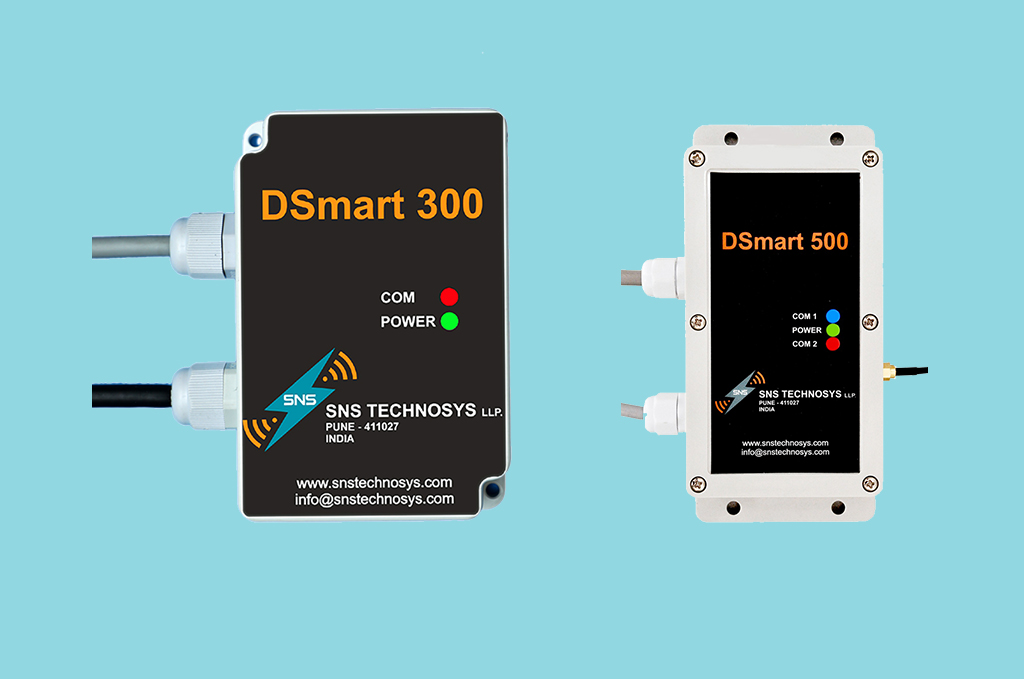
Data plays a critical role in improving efficiency, maintaining compliance, and optimising operations in the changing environment of industrial processes. Industrial data loggers have become vital instruments for gathering and storing critical information in a variety of industries. However, with so many alternatives available, choosing the best industrial data logger may be difficult. We will dig into major issues in our detailed buyer's guide to help you make an informed purchase geared to your unique needs.
Categories
- The Power of Connectivity: How IoT Devices are Transforming Daily Life
- Choosing the Right Industrial Data Logger: A Buyer's Guide
- Integrating Intelligence: The Power of Complete IIoT Solutions
- Securing Your Data: Best Practices for Logging Software Security
- Cracking the Code: Strategies for Efficient and Effective Embedded Product Development
- Seamless Integration: The Art of Embedded Services in Modern Systems
- Future-Ready Components: Innovations in Component Engineering Services
- Embedded Resurgence: How Re-engineering Breathes New Life into Technology
Understanding the Fundamentals: What Exactly Is an Industrial Data Logger?
Let us first create solid knowledge before embarking on the adventure of selecting the best industrial data logger. A data logger for industrial use is a device that records and stores data over time. These devices are useful for monitoring environmental factors, such as temperature, humidity, pressure, and so on. In industrial contexts, recorded data is critical for analysis, quality control, and regulatory compliance.
Identifying Your Prerequisites: Define Your Data Logging Requirements
Identifying your unique requirements is the first step in picking an industrial data logger. Different businesses have different requirements, and not all data loggers are the same. Think about the following:
Data Points and Parameters: Identify the sorts of data that must be logged. Knowing your needed parameters, whether temperature, humidity, voltage, current, or a mix of elements, is critical.
Accuracy and Precision: Determine the amount of precision and accuracy necessary for your application. Some sectors require extreme precision, while others can live with a little margin of error.
Environmental Conditions: Take into account the environment in which the data logger will be used. Choose a logger with a strong construction and enough protection if it will be used outside or in a tough environment.
Choosing Between Wired and Wireless Data Loggers
Industrial data recorders are classified into two types: wired and wireless. Each has advantages and disadvantages, and the choice is based on your individual requirements.
Data Loggers (Wired):
Pros: Reliable, typically less expensive, and appropriate for fixed applications.
Cons: Limited mobility and possible installation issues.
Data Loggers for Wireless Networks:
Pros: Greater flexibility, suited for remote or difficult-to-reach places, and frequently scalable.
Cons: Initial setup may be more complicated, and prices may be greater.
When deciding between wired and wireless data loggers, consider your industrial setup, accessibility, and ease of data retrieval.
Scalability and Expansion: Protecting Your Investment in the Future
The industrial landscape is fluid, and your data logging requirements may change over time. Choosing a data recording solution that is adaptable and extendable guarantees that your investment stays relevant as your needs develop. Look for solutions that allow you to add extra loggers, sensors, or modules without having to completely rebuild your infrastructure.
Data Storage and Retrieval: Ensuring Smooth Operations
Your industrial data logger's storage capacity is crucial, especially if your application demands continuous, long-term monitoring. Consider the frequency of data recording, the volume of data created, and the frequency with which the data must be retrieved. Choose loggers with adequate storage capacity and simple data retrieval techniques.
User Interface and Software Compatibility: Easy to Use
The user interface and connectivity with data analysis applications are sometimes underestimated yet are critical to providing a positive user experience. Choose data loggers with simple user interfaces for quick setup and configuration. Furthermore, be certain that the loggers are compatible with the data analysis tools you want to employ, allowing for smooth integration into your existing workflow.
Power Source and Battery Life: Maximum Performance in Any Environment
Your industrial data logger's power supply and battery life are critical concerns, especially in distant or inaccessible places. Some data recorders are battery-powered, but others may be powered by another source. Determine the time necessary between battery changes or recharging to enable continuous data logging activities.
Meeting Industry Standards Through Compliance and Certification
Data logging techniques are governed by industry-specific legislation and standards. Check that the data logger you choose conforms with industry standards and certifications. This is especially critical in industries like healthcare, pharmaceuticals, and food processing, where following norms is a must.
Budget Considerations: Cost and Performance Balancing
While financial constraints must always be considered, it is critical to achieve a balance between cost and performance. Cheaper choices may be missing aspects that are vital to your business, resulting in long-term inefficiencies. Compare your budget limits to the features and capabilities given by various data loggers to obtain the greatest value for your money.
Conclusion: Making an Informed Decision
Choosing the correct industrial data logger is a strategic choice that may have a big influence on your operations. You may make an informed selection by knowing your requirements, considering the type of logger, assuring scalability, analysing storage capacity, focusing on user interface and compatibility, resolving power source considerations, satisfying compliance standards, and balancing your budget.
As technology advances, industrial data recorders will become more complex in terms of features and capabilities. By remaining informed and taking a strategic approach, you can use data loggers to improve productivity, assure compliance, and move your industrial processes forward. Choose intelligently, and equip your operations with the best industrial data logger for your specific requirements.